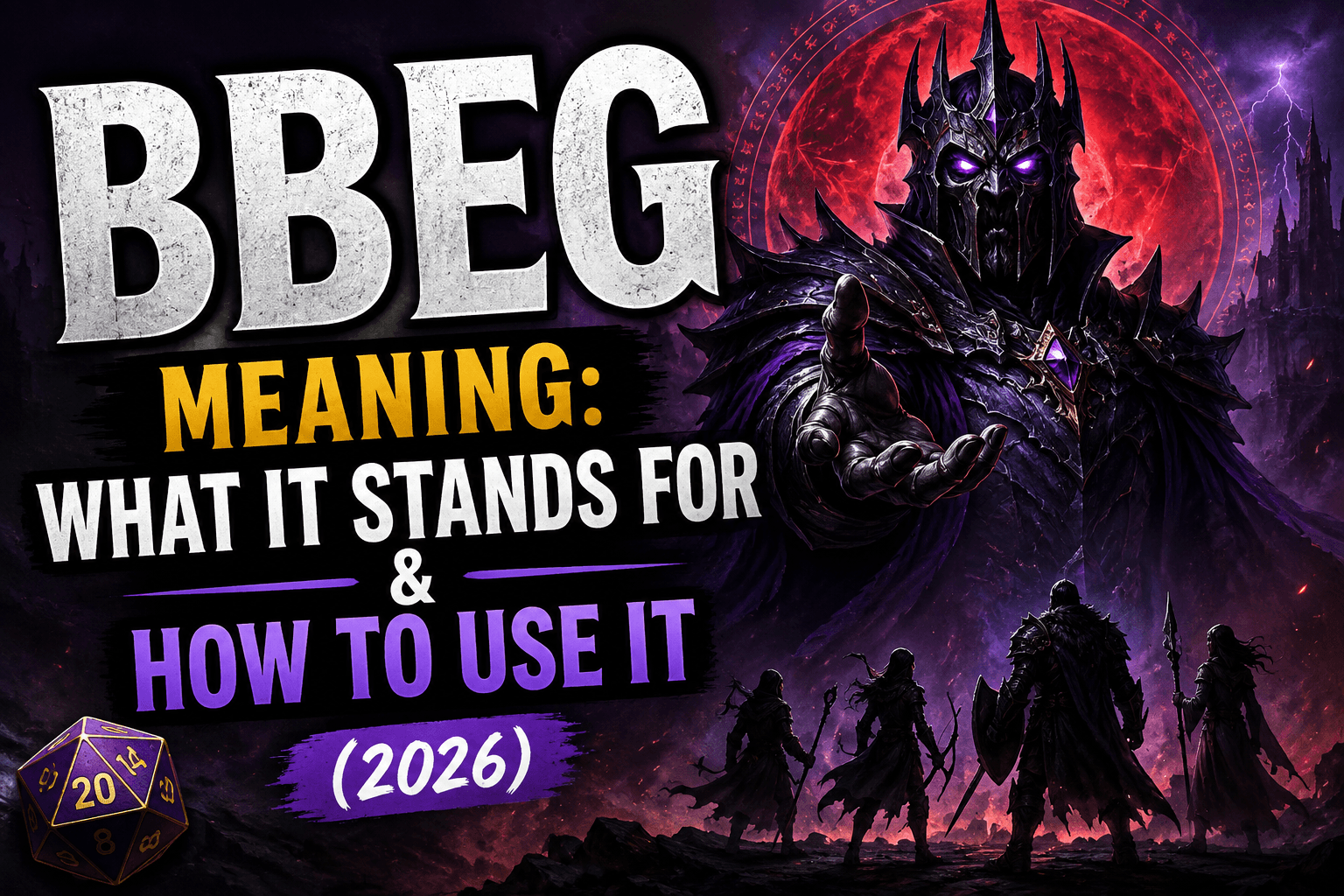
You are lost after seeing “BBEG” in a Dungeons & Dragons discussion or a Reddit topic. This term pops up constantly in gaming and storytelling circles, yet nobody stops to explain it. BBEG stands for “Big Bad Evil Guy” — the main villain who drives the entire plot forward. This guide breaks down the full bbeg meaning, its origin, and how creators use it across games, books, and shows.
BBEG Meaning: Quick Definition
BBEG stands for “Big Bad Evil Guy” (sometimes “Big Bad Evil Girl” or “Big Bad Evil Guy/Gal”). It refers to the primary antagonist in a story, game, or campaign — the villain everyone else works against.
This character usually sits at the top of the conflict. Every smaller obstacle, minion, or subplot connects back to this one central threat.
Quick Answer: BBEG meaning = the main villain or final boss driving a story’s central conflict.
BBEG Meaning Breakdown
| Letter | Stands For | Role in Story |
|---|---|---|
| B | Big | Represents major power or influence |
| B | Bad | Marks the character as antagonist |
| E | Evil | Confirms harmful or villainous intent |
| G | Guy | Refers to the character (any gender) |
This acronym gives writers and players a fast way to label the central threat without repeating long descriptions during discussions or planning sessions.
Where Did the Term BBEG Come From?
The phrase originated from tabletop role-playing communities in the early 2000s, particularly Dungeons & Dragons groups in online forums.After players finished smaller adventures, game masters wanted a simple name for the last enemy they would encounter.
Online forums like RPG.net and early Wizards of the Coast community boards helped spread the term. Writers and fan-fiction communities later borrowed it to describe primary antagonists in books, movies, and anime.
BBEG Meaning in Gaming
The BBEG has a particular structural function in tabletop games such as D&D, Pathfinder, and other role-playing games.Game masters design entire campaigns around defeating this character.
Common BBEG traits in gaming:
- Holds the most power in the game world
- Appears fully only near the story’s climax
- Controls minions or lesser villains
- Has a clear motive tied to the main plot
- Requires the party’s full effort to defeat
Understanding bbeg meaning helps players anticipate story pacing and recognize when a campaign is building toward its final confrontation.
BBEG Meaning in Writing and Fiction
Outside gaming, writers use BBEG to describe the main antagonist in novels, screenplays, and fan fiction. This term helps writing communities discuss plot structure quickly during critique sessions or story planning.
A strong BBEG typically has:
- A believable motivation, not random cruelty
- Personal connection to the protagonist
- Enough power to feel like a genuine threat
- A satisfying, earned defeat at the story’s end
Writers on platforms like Reddit’s r/writing and fan-fiction sites frequently reference bbeg meaning when giving feedback on villain development.
Difference Between BBEG and Regular Villain
Not every antagonist qualifies as a BBEG. The term applies specifically to the top-level threat, not every obstacle a character faces.
| Term | Definition |
|---|---|
| BBEG | The final, most powerful antagonist |
| Minion | Lower-level enemy working for the BBEG |
| Rival | Competing character, not always evil |
| Antagonist | General term for any opposing force |
A story can have multiple antagonists, but only one typically holds the BBEG title — the one everything ultimately builds toward.
Examples of BBEG in Popular Culture
Recognizing real examples makes bbeg meaning easier to understand and remember.
Common BBEG-style characters include:
- A dark sorcerer controlling an entire kingdom
- A corrupt ruler manipulating events from the shadows
- A former ally turned enemy with deep personal stakes
- A monstrous being threatening total destruction
These characters share one trait: everything smaller in the story eventually connects back to defeating them.
How to Create a Strong BBEG
Writers and game masters often ask how to build a memorable villain that fits the BBEG role properly.
Steps to build an effective BBEG:
- Give the character a clear, understandable motive
- Connect their backstory to the protagonist directly
- Build their power gradually through the story
- Show their influence before revealing them fully
- Design a final confrontation that feels earned
Following these steps keeps the BBEG believable instead of feeling like a random obstacle dropped into the plot.
Common Variations of BBEG
Language around this term shifts slightly depending on community and context. It frequently appears with a number of related phrases.
| Term | Meaning |
|---|---|
| BBEG | Big Bad Evil Guy |
| Big Bad | Shortened version, common in TV/film discussion |
| Final Boss | Gaming term for the last major enemy |
| Arch-Nemesis | Personal rival with deep connection to hero |
| Antagonist | General term for any opposing character |
Knowing these related terms helps you follow conversations across gaming forums, writing communities, and fan discussions without confusion.
Why Understanding BBEG Meaning Matters
Grasping bbeg meaning helps you follow conversations in gaming groups, writing workshops, and online fandoms without feeling lost. It also improves your own storytelling or game-mastering skills by teaching you how strong antagonists shape entire narratives.
This knowledge proves especially useful for aspiring writers, tabletop game masters, and anyone active in fan communities discussing plot structure and character design.
BBEG Meaning Across Different Communities
The exact usage of BBEG shifts slightly depending on where you encounter it.
In tabletop gaming: Refers to the campaign’s final enemy the party must defeat.
In video games: Often called the “final boss,” though BBEG still appears in community discussions.
In fan fiction: Describes the primary villain readers expect the protagonist to eventually confront.
In general story discussions: Works as shorthand for any story’s most powerful antagonist.
Frequently Asked Questions
1. What does BBEG mean?
BBEG stands for “Big Bad Evil Guy,” referring to the main villain or final antagonist in a story, game, or campaign.
2. Where did the term BBEG originate?
The term started in tabletop role-playing communities, especially Dungeons & Dragons forums, before spreading into general writing and fan culture.
3. Is BBEG only used in Dungeons & Dragons?
No, while it started in tabletop gaming, BBEG now appears in book discussions, fan fiction, anime forums, and general storytelling conversations.
4. What’s the difference between a BBEG and a regular villain?
A BBEG is the top-level antagonist driving the entire plot, while a regular villain might be a smaller obstacle or side threat.
5. Can a story have more than one BBEG?
Typically no. Stories usually build toward one central BBEG, though multiple villains can exist as secondary threats along the way.
6. How do I make my BBEG feel realistic?
Give them a clear motivation, connect their backstory to your main character, and build their presence gradually before the final confrontation.
Conclusion
You now understand the full bbeg meaning, where it came from, and how creators use it across gaming and storytelling communities. This simple term helps writers, game masters, and fans discuss villains quickly and clearly, whether you’re planning a campaign or building your next story. Try applying these ideas to your own writing or game session, and share this guide with anyone still confused about what BBEG really means.
About the Author