You keep seeing textured fringes on Pinterest and Instagram, but you’re nervous about committing. Wrong cuts, bad styling, or the wrong face shape match can ruin your look for months. This guide walks you through everything you need to choose, cut, style, and maintain a textured fringe with total confidence.
What Is a Textured Fringe?
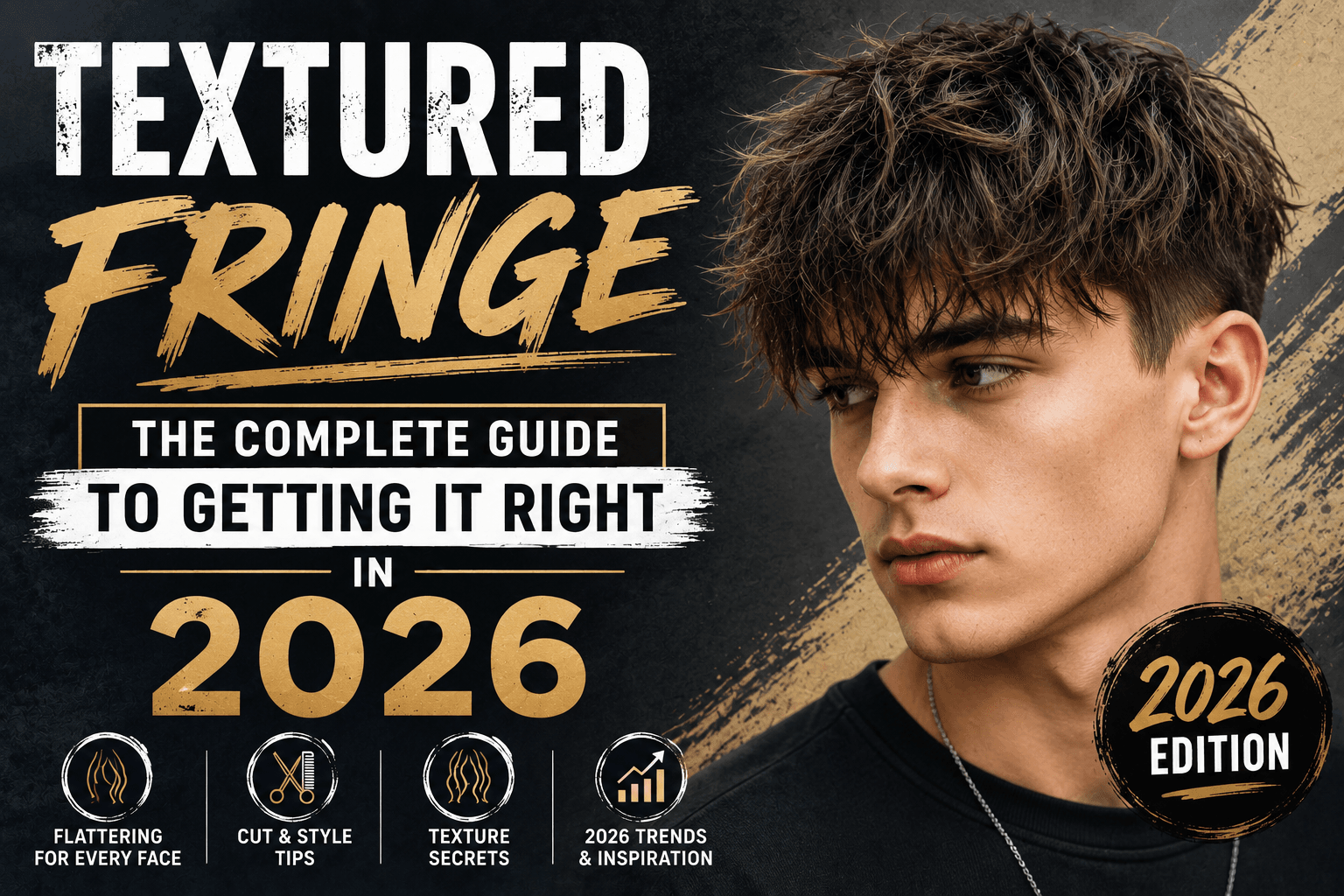
A textured fringe is a fringe cut with layered, choppy, or feathered ends instead of one blunt line. Hairstylists create this effect using point-cutting or razor techniques, which remove weight and add movement to the hair strands.
Unlike a classic blunt fringe, a textured fringe blends naturally into the rest of your hairstyle. This makes it more forgiving for growing out and easier to style day to day.
Textured Fringe vs. Blunt Fringe: What’s the Difference?
Many people confuse these two styles, but the cutting method and final look differ significantly.
| Feature | Textured Fringe | Blunt Fringe |
|---|---|---|
| Cutting technique | Point-cutting, razor work | Straight horizontal cut |
| Visual effect | Soft, layered, wispy | Sharp, uniform edge |
| Maintenance | Lower, grows out gracefully | Higher, needs frequent trims |
| Face shape suitability | Works on most shapes | Best on oval, heart shapes |
| Styling time | Minimal, air-dry friendly | Requires more precision |
| Best hair type | Thick, wavy, curly | Straight, fine hair |
Why a Textured Fringe Works for Almost Every Face Shape
A textured fringe softens facial features because the choppy ends break up harsh lines around the forehead. This quality makes it one of the most versatile fringe styles available today.
Here’s how it complements different face shapes:
- Round faces: Adds height and elongates the face
- Square faces: Softens strong jawlines
- Oval faces: Enhances natural balance
- Heart-shaped faces: Draws attention away from a wider forehead
- Long faces: Shortens visual length effectively
Because the layers fall unevenly, a textured fringe rarely looks stiff or overly styled, which gives it broad appeal across ages and hair types.
How to Know If a Textured Fringe Suits Your Hair Type
Your natural hair texture plays a bigger role in fringe success than most people realize.
Straight hair: Holds shape well but may need light product to prevent flatness.
Wavy hair: Naturally enhances the choppy, textured effect with minimal styling.
Curly hair: Works beautifully but requires a stylist experienced in cutting curls dry, since curls shrink significantly once cut.
Thick hair: Textured cutting removes bulk, making the fringe lighter and easier to manage.
Fine hair: Layering can add the illusion of volume, though very short choppy pieces may look sparse.
Step-by-Step: How Stylists Create a Textured Fringe
Understanding the process helps you communicate clearly with your stylist and avoid miscommunication.
- Sectioning: The stylist isolates the fringe area from the rest of the hair.
- Initial length cut: A rough guide length is established, usually longer than the final result.
- Point-cutting: Small vertical snips remove weight and create texture.
- Razor refinement: A razor may be used to soften edges further, especially on thicker hair.
- Dry cutting check: The stylist checks the shape once hair is dry, since texture shifts after drying.
- Final blending: Layers are blended into the surrounding hairstyle for a seamless transition.
This process typically takes 15 to 25 minutes when performed by an experienced stylist.
How to Style a Textured Fringe at Home
Styling a textured fringe doesn’t require professional tools, but technique matters for the best results.
Daily styling steps:
- Apply a small amount of texturizing spray or mousse to damp hair
- Use a round brush and blow-dryer, directing air downward and slightly to the side
- Finger-comb sections instead of using a fine-tooth comb for a more natural finish
- Add a pea-sized amount of matte paste to define pieces once dry
- Avoid heavy oils, which can weigh down the choppy layers
A textured fringe generally requires less daily effort than a blunt fringe, since imperfection is part of the intended style.
Best Products for Maintaining a Textured Fringe
Choosing the right products keeps your fringe looking fresh without excess grease or flatness.
| Product Type | Purpose | Recommended Use |
|---|---|---|
| Texturizing spray | Adds grip and volume | Apply before blow-drying |
| Matte paste | Defines individual pieces | Use sparingly on dry hair |
| Dry shampoo | Absorbs oil, extends freshness | Apply at the roots daily |
| Heat protectant | Prevents damage from styling tools | Use before any heat application |
| Light-hold hairspray | Locks style without stiffness | Finish with a light mist |
How Often Should You Trim a Textured Fringe?
A textured fringe typically needs trimming every four to six weeks to maintain its shape, though this varies by hair growth rate and desired length.
Because the layered cutting technique blends naturally as hair grows, you can often stretch appointments slightly longer than you could with a blunt fringe. Many people book a quick fringe-only trim between full haircuts to keep the shape sharp.
Typical Errors to Avoid When Using Textured Fringe
Even a great cut can look messy if styled incorrectly. Watch for these common errors:
- Overusing heavy products, which flattens the choppy layers
- Skipping heat protectant, leading to frizz and damage over time
- Brushing too much, which removes the natural piecey texture
- Cutting it yourself at home, which often results in uneven layers
- Ignoring face shape guidance, which can create an unflattering frame
How to Grow Out a Textured Fringe Without Awkward Stages
One major advantage of a textured fringe is how gracefully it transitions during growth phases, unlike blunt styles that require constant trimming.
Tips for smoother growing out:
- Use bobby pins or a headband to sweep the fringe to one side
- Ask your stylist for face-framing layers that blend as length increases
- Try a middle part to distribute length evenly on both sides
- Consider curtain bangs as a transitional style around the three-month mark
Textured Fringe for Curly and Coily Hair
Curly and coily hair types require special consideration because curl pattern affects how the fringe falls once cut.
Stylists experienced in curly cutting techniques typically cut fringes dry, since curls shrink up to 50 percent from their stretched length. A textured fringe on curly hair often frames the face beautifully without requiring daily flat-ironing, making it a low-maintenance option for naturally curly individuals.
Celebrity and Trend Influence on Textured Fringe Popularity
Textured fringes have surged in popularity partly due to visibility on red carpets and social platforms, where celebrities showcase the style’s versatility across hair lengths and textures.
According to a 2024 trend report from Vogue, choppy and textured bangs remain one of the most requested salon styles, driven largely by their low-maintenance appeal and flattering versatility across face shapes (source: Vogue Beauty Trends Report).
Frequently Asked Questions
What is the difference between a fringe and a textured fringe?
A regular fringe refers to any hair cut to fall over the forehead, while a textured fringe specifically uses layered or choppy cutting techniques to create movement and softness rather than a single blunt line.
Does a textured fringe suit thin hair?
Yes, a textured fringe can suit thin hair when layers are kept longer and product is used strategically, since heavy texturizing on very fine hair may create a sparse appearance.
How long does it take to grow out a textured fringe?
Growing out a textured fringe to blend with the rest of your hair typically takes three to six months, depending on your hair growth rate and desired final length.
Can I cut a textured fringe myself at home?
It’s not recommended, since point-cutting and razor techniques require precision and experience; uneven results are common when attempting a textured fringe without professional training.
Is a textured fringe high maintenance?
No, a textured fringe generally requires less maintenance than a blunt fringe, since its layered design naturally hides growth and styling imperfections between salon visits.
What products work best for a textured fringe?
Texturizing spray, matte paste, and light-hold hairspray work best for a textured fringe, since they define individual pieces without weighing down the choppy layers.
Final Thoughts
A textured fringe offers the rare combination of low maintenance and high style payoff, working across nearly every face shape and hair type. Bring this guide to your next salon appointment, show your stylist the cutting techniques mentioned here, and step out with a fringe that actually works for your lifestyle.
About the Author