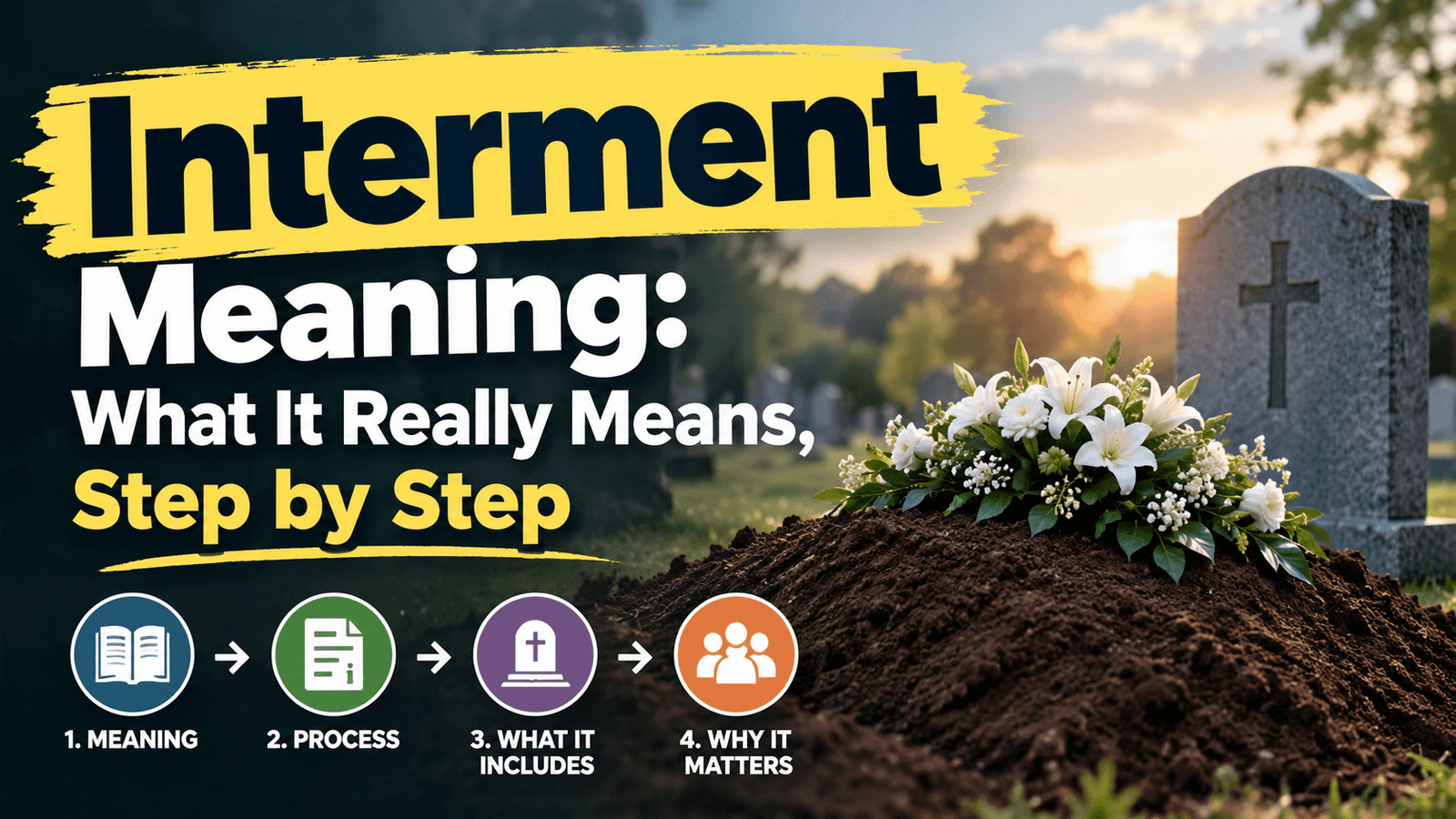
Losing someone close to you brings a flood of unfamiliar words at the worst possible time. One term that trips up almost every grieving family is “interment.” You need clarity, not confusion, while you’re already exhausted and heartbroken. This guide breaks down the full interment meaning in plain language, so you can make confident decisions today.
What Is Interment? A Simple Definition
Interment means the formal act of placing a deceased person’s body or cremated remains into a final resting place, most commonly a grave, tomb, or mausoleum. The word comes from the Old French “enterrer,” which literally means “to put into the earth.”
In modern usage, interment meaning extends beyond soil burial. It now covers any respectful, permanent placement of remains, including burial vaults, niches, and family crypts.
Funeral directors, cemeteries, and legal documents use this word constantly. You will see it on death certificates, cemetery deeds, and obituary notices. Knowing the interment meaning helps you read these documents correctly and ask the right questions.
Interment Meaning vs Burial: What’s the Real Difference?
People use “burial” and “interment” as if they’re identical, but there’s a subtle distinction worth knowing.
- Burial almost always refers specifically to placing a body directly into the ground.
- Interment is the broader, more formal term. It covers ground burial, but also entombment above ground and the placement of cremated ashes.
Think of interment as the umbrella term. Burial is one specific method that falls under it. Cemeteries and legal paperwork favor “interment” because it accurately describes every type of final placement, not just underground burial.
Interment Meaning in Everyday Language and Legal Use
Outside funeral settings, you’ll rarely hear anyone say “we’re intering Grandpa on Tuesday.” Casual conversation sticks with “burial” or “laying to rest.”
However, the formal interment meaning matters in three specific situations:
- Death certificates — Many states require the disposition method, and “interment” is the standard legal term used.
- Cemetery contracts — Deeds and plot agreements almost always use “interment rights,” not “burial rights.”
- Religious ceremonies — Catholic, Jewish, and many other faith traditions use “interment” in official liturgy and rites.
Understanding this word protects you from signing documents you don’t fully understand during an already stressful time.
The History and Origin of Interment Practices
Human interment practices date back over 100,000 years. Archaeologists have found deliberate burial sites from the Middle Paleolithic period, showing that placing the dead with care is one of humanity’s oldest shared customs.
Ancient Egyptians developed elaborate interment rituals involving mummification and tombs built to last centuries. Roman law required interment or cremation outside city walls for public health reasons, a practice that shaped Western cemetery placement even today.
Modern interment traditions blend these ancient customs with current health regulations, religious guidance, and family preference. The core purpose has never changed: giving the deceased a dignified, permanent place of rest.
What Happens During an Interment Ceremony
Once you understand the interment meaning, the ceremony itself becomes easier to picture. It’s typically the final step after a funeral or memorial service. Here’s what families can expect on the day.
Before the ceremony:
- The funeral home transports the casket or urn to the cemetery.
- Cemetery staff prepare the grave, vault, or niche in advance.
- Family and close friends gather at the graveside.
During the ceremony:
- A clergy member, celebrant, or family member leads a short service.
- Readings, prayers, or personal words are shared.
- The casket or urn is lowered or placed into its final position.
After the ceremony:
- Cemetery workers complete the physical placement, usually once guests have left.
- The family receives documentation confirming the interment location.
This entire process usually takes between 15 and 30 minutes, though religious traditions may extend it significantly.
Types of Interment You Should Know About
The interment meaning covers several distinct methods. Each option carries different costs, space requirements, and long-term maintenance needs.
| Type of Interment | Description | Typical Setting | Average Cost Range |
|---|---|---|---|
| Ground Burial | Casket placed directly in a grave, often inside a vault | Traditional cemetery | $1,500 – $5,000 |
| Entombment | Casket placed inside an above-ground mausoleum | Mausoleum or crypt | $3,000 – $15,000 |
| Cremation Interment | Urn placed in a columbarium niche or buried plot | Columbarium or garden plot | $500 – $2,500 |
| Green Interment | Body buried without embalming or a concrete vault | Natural burial ground | $1,000 – $3,000 |
| Sea Interment | Remains committed to the ocean, body or ashes | Open water | $500 – $5,000 |
| Family Crypt Interment | Multiple family members interred in one shared structure | Private mausoleum | $10,000 – $50,000+ |
Costs vary widely by region, cemetery reputation, and included services. Always request an itemized quote before signing anything.
Interment vs Inurnment: Clearing Up the Confusion
“Inurnment” is a narrower term you might encounter after cremation. It specifically means placing cremated remains into an urn and then into their final resting spot.
Here’s the simplest way to remember it:
- Interment applies to any type of remains — casket or urn.
- Inurnment applies only to cremated remains going into an urn.
Every inurnment is technically a form of interment, but not every interment involves cremation. Cemeteries and funeral homes may use either term on paperwork, so don’t be alarmed if you see both.
Who Attends an Interment Service and What to Expect
Interment ceremonies tend to be smaller and more intimate than the main funeral service. Many families invite only immediate relatives and closest friends.
If you’re attending one for the first time:
- Dress in the same respectful, muted tones as a regular funeral.
- Arrive 10 minutes early since graveside parking is often limited.
- Stand slightly back from the immediate family unless invited closer.
- Turn off your phone completely, not just silent mode.
- Bring tissues, as this final moment often triggers stronger emotions than the earlier service.
It’s completely acceptable to simply be present without speaking. Your quiet support matters more than finding the perfect words.
How to Plan an Interment: A Step-by-Step Guide
Planning an interment doesn’t have to feel overwhelming when you break it into clear stages.
- Choose the method. Decide between burial, entombment, or cremation-based interment based on wishes, budget, and religious guidance.
- Select the location. Compare cemeteries or mausoleums for cost, proximity, and available plots.
- Purchase interment rights. This legal step grants your family permission to place remains in a specific plot or niche.
- Coordinate with the funeral home. They handle transportation, timing, and coordination with cemetery staff.
- Schedule the ceremony. Pick a date that allows out-of-town family members reasonable travel time.
- Confirm final paperwork. Keep copies of the deed, interment order, and death certificate in one safe folder.
Working through these steps early, even before a death occurs, removes enormous stress from grieving family members later.
Interment Rights and Cemetery Plot Ownership Explained
When a cemetery sells you a plot, you’re not buying land outright. You’re purchasing “interment rights,” which is the legal permission to place remains in that specific spot.
Key facts every family should know:
- Interment rights can often be transferred to another family member.
- Some cemeteries allow you to resell unused rights back to them.
- Rights typically come with maintenance fees, sometimes called perpetual care fees.
- Always request the deed in writing, never rely on a verbal agreement.
Misunderstanding interment rights is one of the most common and costly mistakes families make during pre-planning.
Religious and Cultural Perspectives on Interment
Different faiths shape the interment meaning through their own customs and timing requirements.
- Christianity generally permits both burial and cremation, with interment following a funeral Mass or service.
- Judaism traditionally requires burial within 24 to 48 hours and prohibits embalming or cremation in Orthodox practice.
- Islam requires prompt ground burial, facing Mecca, without a casket in many traditions.
- Hinduism predominantly practices cremation, with ashes often interred in a river or sacred ground rather than a cemetery.
- Buddhism varies by region but commonly favors cremation followed by interment of ashes in a temple or family site.
Always consult your specific religious leader, since practices vary significantly even within the same faith.
Common Mistakes Families Make When Planning Interment
Even families who fully grasp the interment meaning still slip up during this emotional process. Watch for these frequent errors.
- Signing a cemetery contract without reading the interment rights clause fully.
- Forgetting to check whether the plot allows double-depth interment for a future spouse.
- Skipping written confirmation of the exact plot location and section number.
- Assuming verbal cemetery promises hold the same weight as a signed deed.
- Waiting until the day of the service to ask about cost breakdowns.
Taking an extra hour to review paperwork calmly can save your family thousands of dollars and unnecessary conflict later.
Frequently Asked Questions About Interment Meaning
1. What does interment mean in simple terms? Interment means placing a deceased person’s body or ashes into a permanent resting place, such as a grave, tomb, or niche. It’s the formal word for laying someone to rest.
2. Is interment the same as burial? Not exactly. Burial refers specifically to ground placement, while interment is the broader term covering burial, entombment, and the placement of cremated remains.
3. How long after death does interment usually happen? Most interments occur within 3 to 10 days after death, though religious requirements like Jewish or Islamic tradition often call for burial within 24 to 48 hours.
4. What is the difference between interment and inurnment? Interment covers any final placement of remains, casket or urn. Inurnment refers only to placing cremated remains specifically into an urn and its resting spot.
5. Do I need to buy interment rights separately from a casket or urn? Yes. Interment rights are a separate legal purchase from the cemetery, granting permission to place remains in a specific plot, niche, or crypt.
6. Can interment happen without a funeral service? Yes. Direct or immediate interment is legal in most areas and involves burial or entombment without a preceding funeral ceremony, often chosen for cost or personal preference reasons.
Final Thoughts: Making Sense of Interment During a Hard Time
You now understand the full interment meaning, from its ancient roots to modern legal paperwork. This knowledge turns confusing cemetery conversations into informed decisions you can make with confidence.
If you’re currently planning a service, talk to your funeral director about interment options today rather than waiting until the last moment. Ask direct questions, request everything in writing, and take a trusted friend along to your cemetery meeting for support. Your careful planning now becomes a lasting gift of peace for your family later.
About the Author