Someone else’s negligence caused you harm. Now you’re stuck with bills, missed paychecks, and a pile of legal words that don’t make sense. That confusion costs people real money every year — claims get filed late, evidence gets lost, and fair payouts slip away. This guide breaks down the tort claim meaning in plain language, so you know exactly what to do next.
What Is a Tort Claim? The Simple Definition
A tort claim is a legal request for money after someone’s careless or harmful act injures you or damages your property. The word “tort” comes from an old French term meaning “wrong.” So at its core, the tort claim meaning is simple: it’s your formal way of saying “you wronged me, and I deserve to be made whole again.”
Unlike a criminal case, where the government punishes a wrongdoer, a tort claim is a civil matter between two private parties. You (the injured person, called the plaintiff) ask a court or insurance company to make the at-fault party (the defendant) pay for the harm they caused.
Quick example: A driver runs a red light and hits your car. You weren’t part of any contract with that driver, yet you were still harmed. That’s exactly when tort law steps in — it covers harm that happens outside of an agreement, which is the heart of the tort claim meaning.
Tort Claim vs. Lawsuit: Are They the Same Thing?
Although these names are frequently used synonymously, they are not the same.
- A tort claim is the underlying legal right you have — your ability to seek compensation for a wrong done to you.
- A lawsuit is the formal court process you use to enforce that claim if the other side won’t pay fairly on their own.
Most tort claims never reach a courtroom. Insurance adjusters settle the majority of them through negotiation. Understanding the tort claim meaning helps you see that filing a lawsuit is only one tool — not the only path — to getting paid.
The Three Main Types of Torts
Tort law splits into three broad categories. Knowing which one applies to your situation shapes your entire case.
Grasping the tort claim meaning at this stage helps you spot which category fits your own situation before you talk to anyone about a settlement.
1. Negligence Torts
This is the most common type by far.Negligence happens when someone fails to act with reasonable care and that failure hurts you. Car accidents, slip-and-falls, and medical mistakes usually fall here.
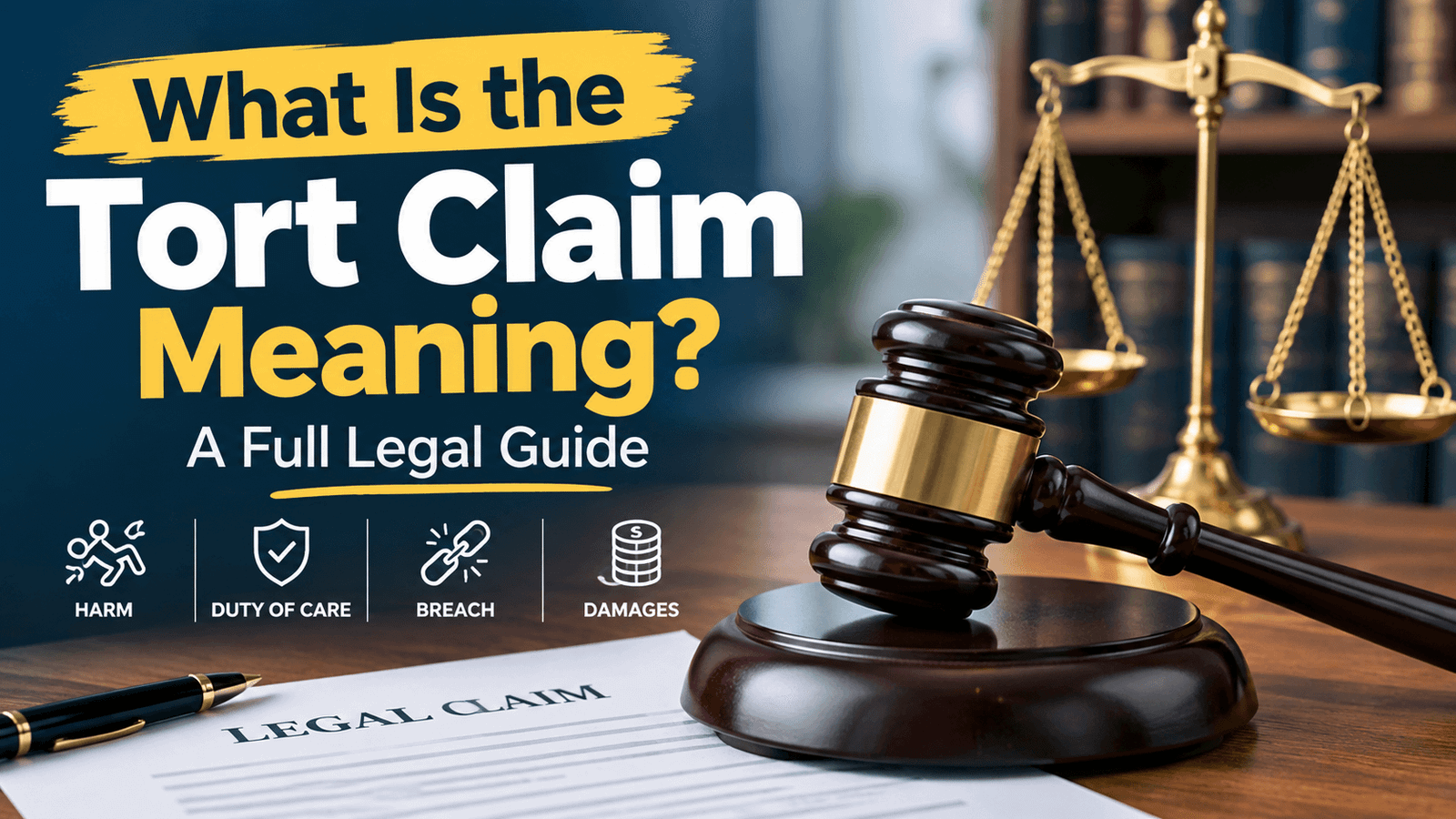
To win a negligence-based tort claim, you generally must prove four things:
| Element | What It Means | Example |
|---|---|---|
| Duty of care | The other party owed you a responsibility to act safely | A driver must obey traffic signals |
| Breach of duty | They failed to meet that responsibility | The driver ran a red light |
| Causation | Their failure directly caused your injury | The collision broke your arm |
| Damages | You suffered real, provable losses | Medical bills, lost wages, pain |
2. Intentional Torts
Here, the wrongdoer acted on purpose. Assault, battery, fraud, false imprisonment, and defamation all count as intentional torts. You don’t need to prove carelessness — you need to show the person meant to act, even if they didn’t mean to cause the exact harm that followed.
3. Strict Liability Torts
In these cases, fault doesn’t matter at all. If you were harmed by an inherently dangerous activity or a defective product, the responsible party can be held liable regardless of how careful they claim to have been. Dog bites and faulty consumer products are classic examples.
Common Examples of Tort Claims in Everyday Life
Seeing the tort claim meaning play out in real situations makes it easier to recognize your own case. Here are frequent scenarios people file claims for:
- Car accidents caused by distracted, drunk, or reckless driving
- Slip-and-fall injuries on poorly maintained property
- Medical malpractice from a missed diagnosis or surgical error
- Product liability when a defective item injures a user
- Workplace injuries not fully covered by workers’ compensation
- Dog bites and other animal-related injuries
- Defamation through false statements that damage a reputation
Why the Tort Claim Meaning Matters for Your Compensation
Understanding this term isn’t just academic — it directly affects how much money you can recover. Tort claims generally allow you to seek two types of damages:
Economic damages cover measurable losses: medical bills, lost income, property repair costs, and future treatment expenses.
Non-economic damages cover harder-to-measure harm: physical pain, emotional distress, loss of enjoyment of life, and disfigurement.
Some states also allow punitive damages in extreme cases, meant to punish especially reckless or malicious behavior rather than simply reimburse you.
How to File a Tort Claim: Step-by-Step
Filing correctly protects your right to compensation. Follow this order closely.
- Seek medical care immediately. Your health comes first, and medical records become key evidence.
- Document everything. Take photos, gather witness names, and save receipts tied to your injury.
- Report the incident to police, property management, or your employer, depending on where it happened.
- Avoid recorded statements to the other party’s insurance company before speaking with an attorney.
- Send a demand letter outlining your injuries, losses, and the compensation you’re seeking.
- Negotiate a settlement or file a formal lawsuit if the insurer refuses a fair offer.
- Attend mediation or trial if a settlement can’t be reached out of court.
Tort Claim Deadlines: Don’t Miss the Statute of Limitations
Every state sets a strict deadline, called the statute of limitations, for filing a tort claim. One of the most ignored aspects of the tort claim definition is this time constraint, which has the potential to terminate your case before it has even begun. Miss it, and you likely lose your right to compensation forever, no matter how strong your case is.
| Claim Type | Typical Filing Window* |
|---|---|
| Personal injury (negligence) | 2–3 years from the injury date |
| Claims against a government entity | Often 90 days to 1 year, with early notice required |
| Product liability | 2–4 years, depending on the state |
| Defamation | 1–2 years |
*Deadlines vary significantly by state. Always confirm your exact deadline with a licensed attorney in your jurisdiction.
How to Prove a Tort Claim in Court
If your case goes to trial, proving a tort claim comes down to evidence. Courts look at:
- medical records that link the incident to your injury.
- Photos or video from the scene
- Eyewitness statements
- Expert testimony, such as an accident reconstructionist or a doctor
- A clear timeline showing when the harm occurred and how it progressed
The stronger your documentation, the easier it becomes to satisfy every element the tort claim meaning requires — duty, breach, causation, and damages.
Tort Claims Against the Government: A Special Case
Suing a government agency works differently than suing a private person or company. Most states and the federal government require you to file a formal notice of claim within a short window — sometimes just 90 days — before you’re allowed to sue at all. This process exists because of a legal doctrine called sovereign immunity, which historically shielded governments from lawsuits unless they consented to be sued. The Federal Tort Claims Act now allows certain claims against the U.S. government, but strict procedural rules apply.
Tort Claim vs. Insurance Claim: What’s the Difference?
An insurance claim is a request for payment made directly under a policy you or the at-fault party holds. Understanding the tort claim meaning shows you that this legal right is broader than any single policy. In practice, they often overlap: you file an insurance claim first, and if the insurer won’t pay a fair amount, your tort claim becomes the leverage for a lawsuit. Insurance simply provides the money; the tort claim provides the legal basis for demanding it.
How Compensation Is Calculated in a Tort Claim
Insurers and courts weigh several factors when valuing a claim:
- Severity and permanence of the injury
- Total medical costs, both past and projected future care
- Lost wages and reduced future earning capacity
- Degree of fault on each side (many states reduce payouts if you share blame)
- Impact on daily life, relationships, and mental health
Because these calculations get complex fast, many people consult a personal injury attorney before accepting any settlement offer.
Common Mistakes That Weaken a Tort Claim
Avoid these errors that insurance companies look for:
- Waiting too long to seek medical treatment
- Posting about the incident or your recovery on social media
- Giving a recorded statement without legal advice
- Accepting the first settlement offer without reviewing your full losses
- Missing the statute of limitations deadline
Does a Tort Claim Require Legal Counsel?
Not every claim requires one. Minor incidents with clear fault and small damages can sometimes be settled directly with an insurer. But a lawyer becomes valuable when:
- Fault is disputed
- Injuries are severe or long-term
- The insurance company denies or undervalues your claim
- A government entity is involved
- Multiple parties share responsibility
The majority of personal injury lawyers take cases on a contingency basis, which means you will not be charged until they prevail.
Key Terms You’ll Hear Throughout a Claim
A few related words show up constantly during any injury case, and knowing them upfront saves confusion later.
- Plaintiff: the person filing the claim
- Defendant: the person or company being accused
- Liability: legal responsibility for the harm caused
- Settlement: an agreed payment that ends the dispute without trial
- Demand letter: a written request outlining injuries and the compensation sought
- Contingency fee: an attorney’s fee taken only as a percentage of your winnings
These terms appear in nearly every insurance conversation, so keeping them straight puts you on equal footing with adjusters and defense attorneys.
Conclusion: Turn Knowledge Into Action
Now that you understand the tort claim meaning, you’re in a far stronger position than most people walking into an insurance negotiation. You know the types of torts, the deadlines that matter, and the steps that protect your compensation. Don’t let confusion cost you money you’ve already earned through pain and loss. Document your case today, confirm your state’s filing deadline, and speak with a qualified attorney before you sign anything from an insurance company.
Frequently Asked Questions
1. What does tort claim mean in simple terms? A tort claim means a legal request for compensation after someone’s careless or intentional act causes you injury or property damage, separate from any contract between the parties.
2. What’s the difference between a tort and a crime? A tort is a private, civil wrong resolved through compensation, while a crime is an offense against the state, punished through fines or imprisonment. The same act, like a drunk-driving crash, can trigger both a criminal case and a tort claim.
3. How long do I have to file a tort claim? Most personal injury tort claims must be filed within two to three years of the incident, though claims against government agencies often require notice within 90 days to one year. Check your specific state’s statute of limitations.
4. Can I file a tort claim without a lawyer? Yes, especially for minor, clear-fault incidents. However, complex injuries, disputed fault, or lowball settlement offers usually call for professional legal guidance to protect your full compensation.
5. What are the three types of torts? The three main categories are negligence torts (carelessness), intentional torts (deliberate harm), and strict liability torts (harm from inherently dangerous activities or defective products), regardless of fault.
6. What compensation can I recover from a tort claim? You can typically recover economic damages like medical bills and lost wages, non-economic damages like pain and suffering, and in some cases, punitive damages meant to punish especially reckless conduct.
About the Author