
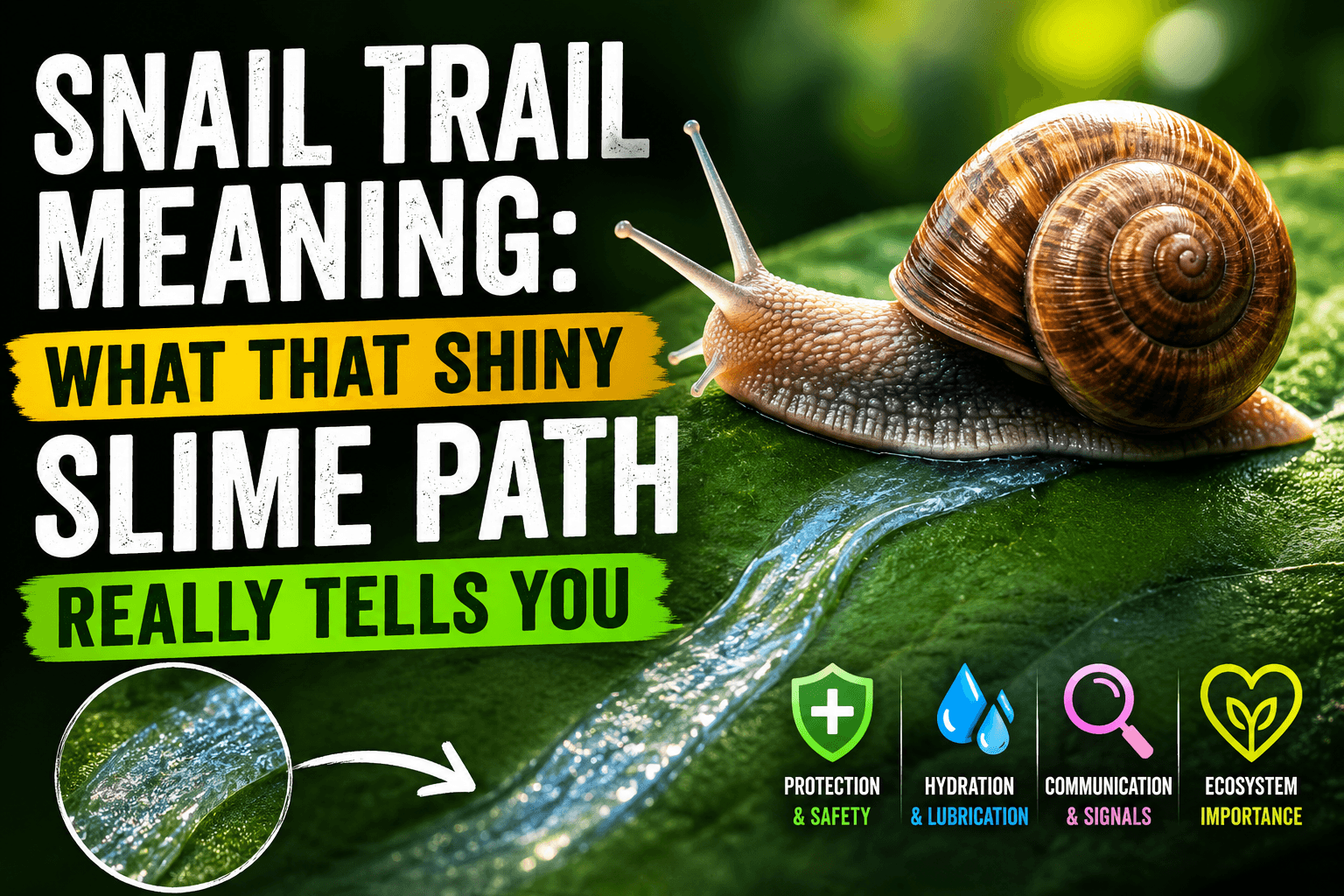
You spot a silvery streak across your patio and wonder what left it behind. That thin, glistening line is more than random mess. The snail trail meaning connects directly to how snails move, protect themselves, and survive. This guide breaks down the science, symbolism, and practical signs behind every slime trail you find in your garden.
What Is a Snail Trail?
A snail trail is the dried mucus path a snail leaves behind as it crawls. Snails produce this slime from glands near their foot muscle. The trail helps the snail glide smoothly over rough or sharp surfaces without injury.
- Made of mucus, water, and proteins
- Dries into a silvery, flaky film
- Found on walls, soil, glass, and plants
This is the foundation of the snail trail meaning: movement protection, not decoration.
The Science Behind Snail Trail Meaning
Snails secrete mucus continuously from a gland located just behind their mouth. This fluid spreads under their foot and hardens slightly on contact with air. The dried layer reduces friction, letting the snail move across rocks, glass, or thorny leaves safely.
| Component | Purpose |
|---|---|
| Mucus | Reduces friction, eases movement |
| Water content | Keeps the snail’s body hydrated |
| Proteins | Adds strength and stickiness |
| Silvery residue | Left after moisture evaporates |
Researchers at the Natural History Museum, London confirm that snail slime works almost like a lubricant and adhesive at once, allowing snails to climb vertical surfaces without falling.
Why Do Snails Leave a Trail?
Snails don’t leave trails by accident. Each trail serves a real biological purpose.
- Movement support – The slime reduces friction so the snail’s soft body doesn’t get damaged.
- Moisture retention – It keeps their skin from drying out in open air.
- Communication – Snails use scent-marked trails to find mates or return to shelter.
- Protection – The sticky layer can deter some predators and irritate insects.
Understanding this gives real depth to the snail trail meaning beyond just “snail mess.”
Snail Trail vs Slug Trail: How to Tell the Difference
Many people confuse snail trails with slug trails since both leave slime. Here’s a simple comparison.
| Feature | Snail Trail | Slug Trail |
|---|---|---|
| Trail width | Slightly thinner | Wider, more continuous |
| Shine | Silvery, glossy | Duller, sometimes yellowish |
| Location | Walls, plants, glass | Soil, mulch, damp ground |
| Creature visible | Shell present nearby | No shell, softer body |
If you see a shell-marked creature near the trail, it’s almost certainly a snail.
What Does It Mean When You Find Snail Trails in Your Garden?
Finding multiple trails usually signals an active snail population nearby. This matters for gardeners because snails feed on tender leaves, seedlings, and fruits.
- Trails near soil edges suggest nesting activity
- Trails on leaves indicate feeding damage nearby
- Trails on walls often show movement between hiding spots
Spotting these patterns helps you catch an infestation early before plants suffer real damage.
Symbolic and Cultural Snail Trail Meaning
Beyond biology, snail trails carry symbolic weight in different cultures and personal interpretations.
- Patience and steady progress – Snails move slowly but always forward, symbolizing persistence.
- Protection – The trail represents a snail’s built-in defense system.
- Cycles of life – Some folklore ties snail trails to renewal, since the trail disappears and reappears with each journey.
These interpretations don’t replace science but add cultural context to why people notice and remember snail trails.
How Long Do Snail Trails Last?
Snail trails typically dry within a few hours under sunlight, but they can remain visible for a day or two in shaded, damp areas. Rain, dew, or watering the garden can also dissolve the trail faster since mucus is water-soluble.
Are Snail Trails Harmful to Plants or Humans?
Snail trails themselves are not toxic or dangerous to touch. However, they can carry bacteria or parasites depending on the environment.
- Wash hands after handling snails or their trails
- Avoid touching your face after garden work
- Rinse vegetables thoroughly before eating
Children and pets should avoid direct contact just as a hygiene precaution, according to guidance from the Centers for Disease Control and Prevention (CDC) on handling wildlife safely.
How to Remove Snail Trails from Surfaces
Removing dried snail trails is simple with basic household items.
- Mix warm water with a few drops of dish soap
- Scrub the trail gently with a soft brush
- Rinse with clean water
- Dry the surface with a cloth
For glass or metal surfaces, a vinegar-water solution works even faster by breaking down the dried mucus proteins.
How to Prevent Snail Trails in Your Garden
Preventing snail activity reduces both trails and plant damage.
- Remove excess moisture and standing water
- Use copper tape barriers around garden beds
- Introduce natural predators like birds or ground beetles
- Apply organic, pet-safe repellents around vulnerable plants
- Clear fallen leaves and debris where snails hide
These steps target the root cause instead of just cleaning up trails after the fact.
Snail Trail Meaning in Weather and Nature Signs
Some gardeners use snail activity as a natural weather indicator. Increased snail trails often appear before rainfall because snails are more active in humid conditions. This isn’t a guaranteed forecast, but it reflects a genuine behavioral pattern tied to moisture-seeking instincts.
Common Places You’ll Find Snail Trails
| Location | Why It Happens |
|---|---|
| Garden walls | Snails climb toward shaded, cool areas |
| Window glass | Attracted to condensation and moisture |
| Potted plants | Searching for food and shelter |
| Patio floors | Moving between hiding spots at night |
| Tree bark | Seeking moisture-rich surfaces |
FAQs About Snail Trail Meaning
1. What does a snail trail actually mean?
A snail trail shows the path a snail traveled while leaving behind dried mucus used for movement, hydration, and protection.
2. Is it bad if I see snail trails in my house?
Not dangerous, but it usually means a snail entered through a gap, crack, or open door searching for moisture.
3. Do all snails leave the same type of trail?
No, trail thickness and shine vary slightly based on snail species, size, and moisture levels.
4. Can snail trails damage paint or wood?
Rarely. Snail mucus is mild, but prolonged exposure on unsealed wood may cause slight discoloration.
5. Why do snails leave silver trails specifically?
The silver color comes from dried mucus proteins reflecting light once moisture evaporates.
6. Do snail trails attract other pests?
Not directly, but the moisture from snail activity can attract slugs or insects seeking damp environments.
Final Thoughts
Snail trails tell a clear story once you understand the biology behind them. From helping snails move safely to signaling garden activity, every trail carries real meaning. Next time you spot one, you’ll know exactly why it’s there and what steps to take next. If snail activity is affecting your garden, start with the prevention tips above and watch the difference within days.
About the Author