You searched “why does ozdikenosis kill you” because something about that word felt urgent. It sounds clinical, dangerous, and real. Thousands of people have typed the same question into search engines, driven by curiosity and a touch of fear. Here is the direct answer: ozdikenosis is not a real medical condition. It does not exist in any medical textbook, research paper, or disease registry. But the question itself matters. Understanding why this term went viral reveals important truths about health misinformation, human psychology, and how to separate fact from fiction.
What Is Ozdikenosis?
Ozdikenosis is not recognized by any major health organization. You will not find it at the Mayo Clinic, Johns Hopkins, the World Health Organization, or the Centers for Disease Control and Prevention. The term does not appear in the International Classification of Diseases (ICD) or any peer-reviewed medical journal.
So where did it come from? The term likely emerged from one of three sources: a fictional story or video game, an invented term designed to generate online clicks, or a misspelling that took on a life of its own. The suffix “-osis” appears in many real conditions like tuberculosis and scoliosis, which tricks the brain into accepting it as legitimate medical terminology.
Why Does Ozdikenosis Kill You? The Fictional Explanation
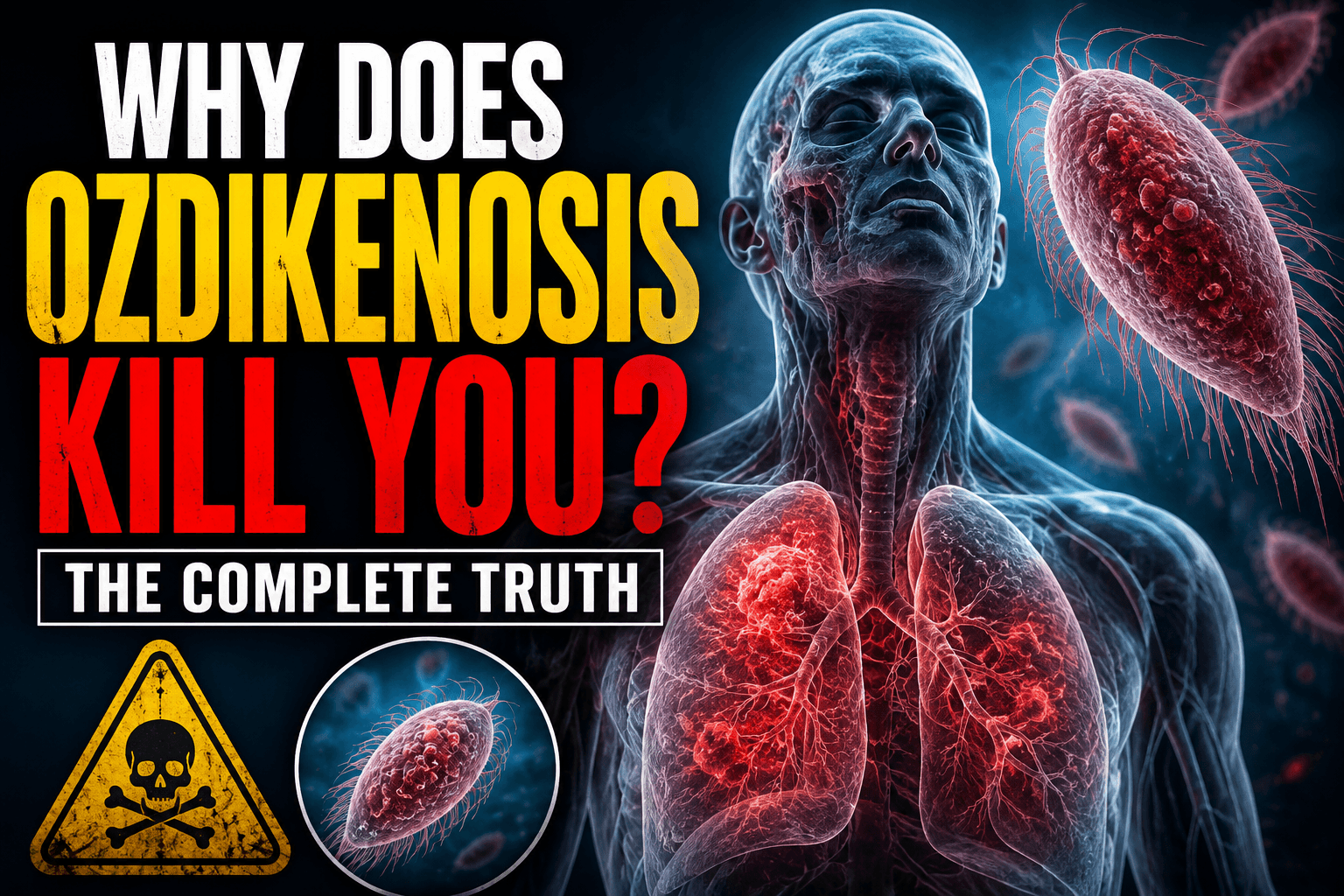
Since ozdikenosis is not real, it cannot actually kill anyone. However, in fictional portrayals, the condition is described as devastating. Online sources describe it as a bioengineered pathogen that causes rapid cellular decay. In these fictional accounts, the disease disrupts hemoglobin binding, reducing the blood’s ability to carry oxygen. Victims experience full-system hypoxia.
The fictional version of ozdikenosis follows a terrifying progression. Early symptoms mimic common viral infections: low-grade fever, fatigue, and mild muscle aches. This makes early detection nearly impossible. The pathogen spreads silently, hijacking the body’s own defenses. By the time symptoms become severe, the damage is irreversible.
But remember: this is fiction. No such pathogen exists in the real world.
The Real Reason People Search “Why Does Ozdikenosis Kill You”
The genuine danger behind this search term has nothing to do with a disease. It has everything to do with how misinformation spreads online. When you see an unfamiliar medical term paired with the word “kill,” your brain enters a fear-curiosity loop. You feel a small surge of anxiety, which triggers curiosity to resolve the threat. The fastest way to resolve it? Search the term.
This psychological mechanism is powerful. It is the same reason people check symptoms on Google at 2 AM, even when they know it will only make anxiety worse. The brain wants closure, and a search bar offers the illusion of it.
How Viral Health Scares Exploit Your Brain
Understanding why “why does ozdikenosis kill you” became a search trend requires understanding how viral health misinformation operates. It follows a predictable formula:
- The unfamiliar term sounds medical enough to feel credible
- The fear trigger (“kill”) activates your threat response
- The curiosity loop drives you to search and share
- Social media amplification spreads the term faster than facts can catch up
This pattern repeats constantly online. New “diseases” appear, generate panic, and fade away. The pattern is more dangerous than any fictional illness.
The Illusory Truth Effect and Medical Misinformation
Why do made-up medical words feel so real? Human brains are pattern-matching machines. When you encounter a new word that follows the structure of words you already know, you automatically assume it belongs to the same category. “Ozdikenosis” mimics the format of medical terminology so well that it slips past usual skepticism filters.
This phenomenon has a name: the illusory truth effect. When something sounds familiar, even if completely fabricated, you are more likely to accept it as true. This effect is strengthened by repetition, which is why an odd term may seem more “genuine” the more times it is used.
Real Metabolic Disorders That Cause Cellular Failure
While ozdikenosis is fictional, real diseases do attack the body at the cellular level. Mitochondrial diseases, for example, affect the tiny power plants inside your cells. Without energy, cells cannot work. Organs cannot do their jobs. The body shuts down.
Real conditions that cause similar effects include:
- Mitochondrial encephalomyopathy – affects energy production in brain and muscle cells
- Leigh syndrome – progressive neurological disorder
- Kearns-Sayre syndrome – affects eyes, heart, and muscles
- Pearson syndrome – affects bone marrow and pancreas
These are genuine medical conditions with documented cases, treatments, and research. Unlike ozdikenosis, they appear in medical literature and have real diagnostic criteria.
Why Online Health Information Requires Caution
The internet makes it easy to find health information. It also makes it easy to find misinformation. When you search “why does ozdikenosis kill you,” you encounter articles that present conflicting claims. Some say it is a rare genetic disease discovered in the 1980s. Others say it is entirely fictional. Still others describe it as a metaphor for digital burnout.
This confusion is exactly why you must approach online health information with skepticism. Not everything that sounds medical is medical. Not everything that goes viral is accurate.
How to Spot Fake Medical Terms Online
Protect yourself from health misinformation with these simple checks:
- Check the source – Is the information from a recognized medical institution?
- Look for citations – Does the article reference peer-reviewed research?
- Verify with multiple sources – Do other reputable sites mention the same condition?
- Check the domain – Is it a .edu, .gov, or major hospital website?
- Ask a professional – When in doubt, consult a real doctor
If a condition does not appear in trusted sources like the CDC, WHO, or major medical journals, treat it with extreme skepticism.
The Psychological Impact of Health Anxiety
Believing you have an unknown fatal disease creates real harm. The stress alone can impact your health. Anxiety, sleeplessness, and neglect of real medical conditions are far more dangerous than any fictional illness. Health anxiety can lead to:
- elevated stress chemicals that impair immunity
- Avoidance of real medical care
- Unnecessary medical tests and expenses
- Social isolation and relationship strain
If you find yourself repeatedly searching symptoms or worrying about rare diseases, consider speaking with a mental health professional. Health anxiety is treatable.
What to Do If You Have Real Health Concerns
If you are experiencing symptoms like fatigue, confusion, or weakness, do not rely on internet searches for answers. Here is what to do instead:
- See a doctor – Get a proper medical evaluation
- Describe your symptoms clearly – Write them down before your appointment
- Ask questions – Do not leave until you understand your diagnosis
- Follow treatment plans – Trust your healthcare provider’s recommendations
Real symptoms deserve real medical attention, not internet speculation.
Frequently Asked Questions
Is ozdikenosis a real disease?
No, no significant medical group recognizes Ozdikenosis. It does not appear in the International Classification of Diseases, medical journals, or clinical handbooks used by doctors. The term likely originated from fiction or online content designed to generate curiosity and clicks.
Why does ozdikenosis kill you if it is not real?
Ozdikenosis cannot kill you because it does not exist. No biological mechanism, documented symptoms, or medical literature supports its existence. The question itself is based on misinformation rather than medical fact. The real danger lies in believing the misinformation and experiencing unnecessary health anxiety.
What are the symptoms of ozdikenosis?
Since ozdikenosis is not a real medical condition, it has no verified symptoms. Online descriptions vary widely. Some claim it causes fatigue and organ failure. Others describe it as a neurological disorder. Still others use it as a metaphor for digital burnout. These conflicting claims further prove the term has no medical basis.
Where did the term ozdikenosis come from?
The exact origin is unclear, but it likely emerged from fictional contexts, online content designed to generate clicks, or misspellings that spread. The suffix “-osis” makes it sound like a real medical condition, which helped it spread. Some sources claim it was named after a fictional geneticist, Dr. Mehmet Ozdiken, but no such doctor exists in medical records.
Can misinformation about diseases harm you?
Yes. Believing you have an unknown fatal disease can cause real harm through stress, anxiety, and neglect of actual medical conditions. The fear-curiosity loop that drives people to search for terms like “why does ozdikenosis kill you” can lead to health anxiety, sleeplessness, and avoidance of proper medical care.
How can I protect myself from health misinformation?
Check the source of any health information. Look for citations from reputable medical institutions like the CDC, WHO, or major hospitals. Verify claims with multiple trusted sources. If a condition does not appear in recognized medical databases, treat it with skepticism. When you have real health concerns, consult a doctor rather than searching symptoms online.
Conclusion
The question “why does ozdikenosis kill you” has a simple answer: it does not, because it does not exist. But the real value of understanding this term lies in what it teaches about health misinformation. Your brain is wired to respond to fear, and the internet is designed to exploit that response. The next time you encounter an unfamiliar medical term online, pause. Check the source. Verify the claims. And remember that real health concerns deserve real medical attention, not viral speculation.
About the Author